It's a dream of every human to fly and reach the sky. Either in terms of glory or literally. If you ask children about their dream most of them would want to become a pilot. This aspiration to be in the wind and above all gives thrill. And when you can't do so you resort to objects and make them fly. Well talking this in today's world may seem obsolete but it's still true that common man live the dream to fly by flying kites and small aircrafts (scaled down) rather than flying in the actual one, which is a bit expensive.
My indulgence of aeromodelling also has the same background. I have always wanted to fly, either a small plane or fly in a big one. I had been making static aero models and small flying gliders to see that I can also fly (my miniature planes). But they were kinda work of novice. No formula no parameter checking. It was all based on trial and error basis. I would make a glider, test fly it and see how it acts and then make modifications accordingly to make it stable in air. I knew different concepts of making the glider stay in air, but how they worked was little know.
We had an aeromodelling workshop on 4th Nov, at IIT. I participated in it and was thrilled by the process of making a balsa wood glider, calculating equations for different parts of the plane.
Following is a photo synopsis of what I did in the workshop.
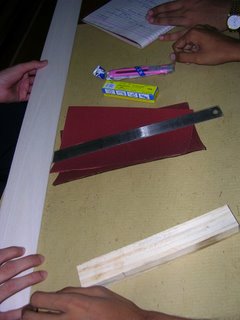
It all started with two strips of balsa wood and other apparatus. Balsa is a special kind of tree with large vaccum tubes running through the lenght making it porous. At the same time it's stiff too. And hence it's famous among aeromodellers as an idle material to make a glider. Very light, dense and stiff material.
We got the equations and different jargons.
Wing, fin, rudder, ailerons, horizontal tail, wing span, wing loading, drag, thrust blah blah.
Loaded the equations with actual number of our model and got the dimensions of each part of the model.
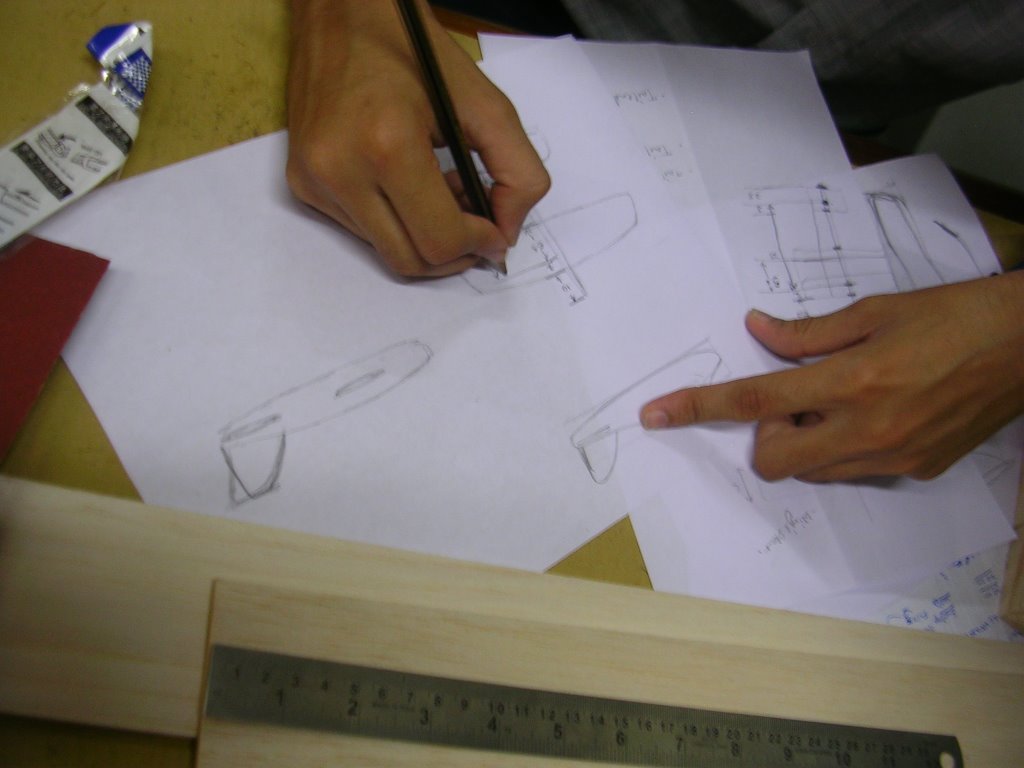
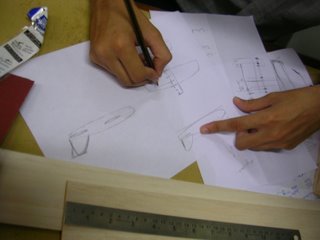
We drew the blue print on paper. We had quite a big discussion on the kind of glider we want to make. The one that flies more, takes longer distance or an unconventional shaped which glides to some distance.
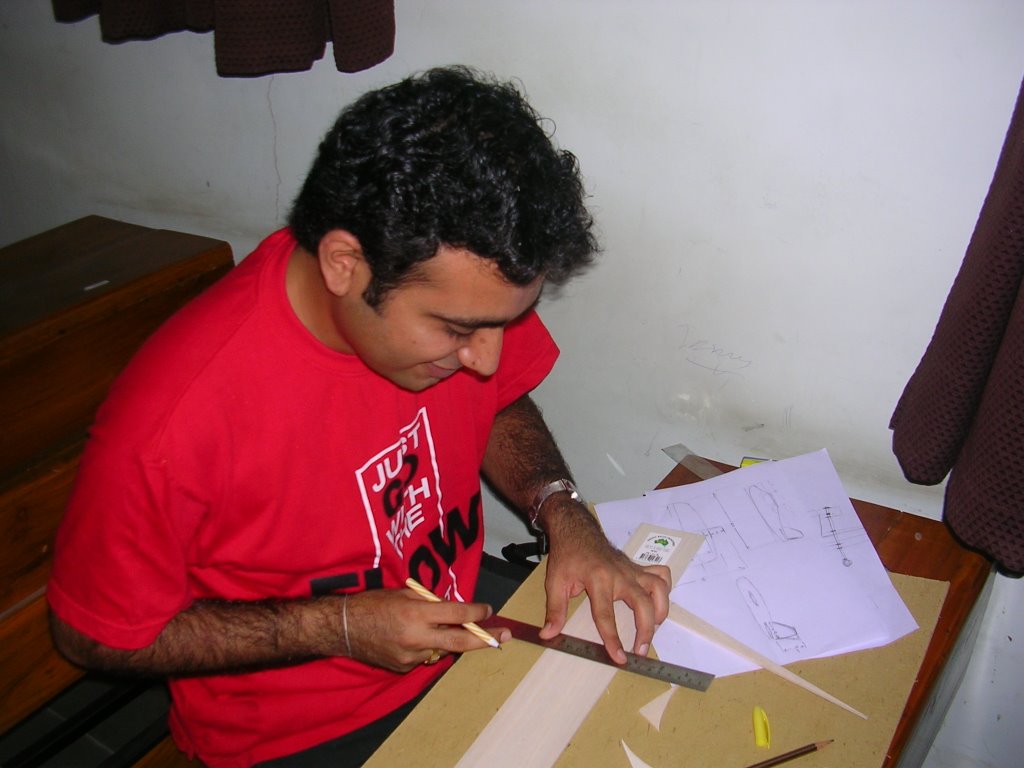
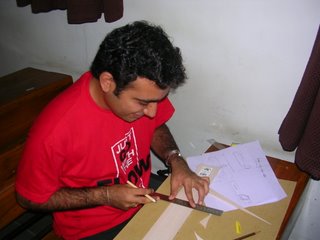
We concluded that simple is the best. And then the cutting shutting and sanding of balsa started.
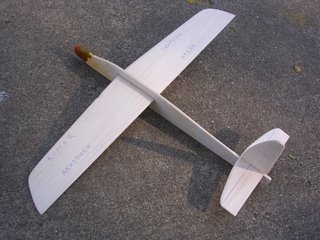
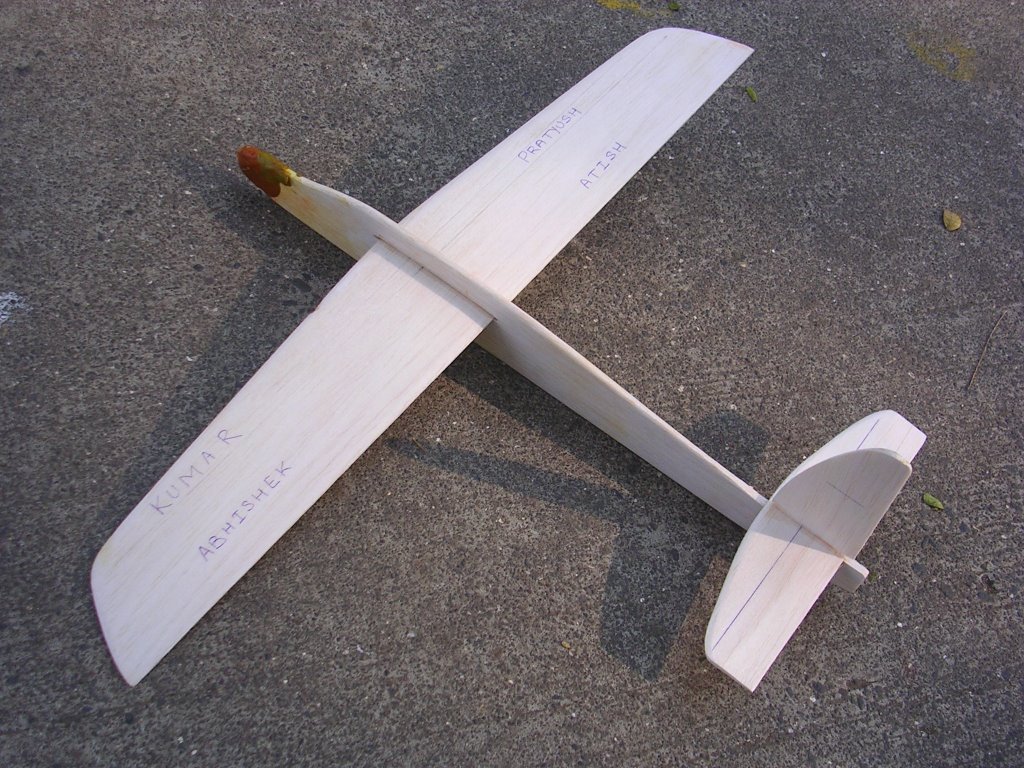
And that's the final product. It was gliding great in calm winds.
 We got the equations and different jargons.